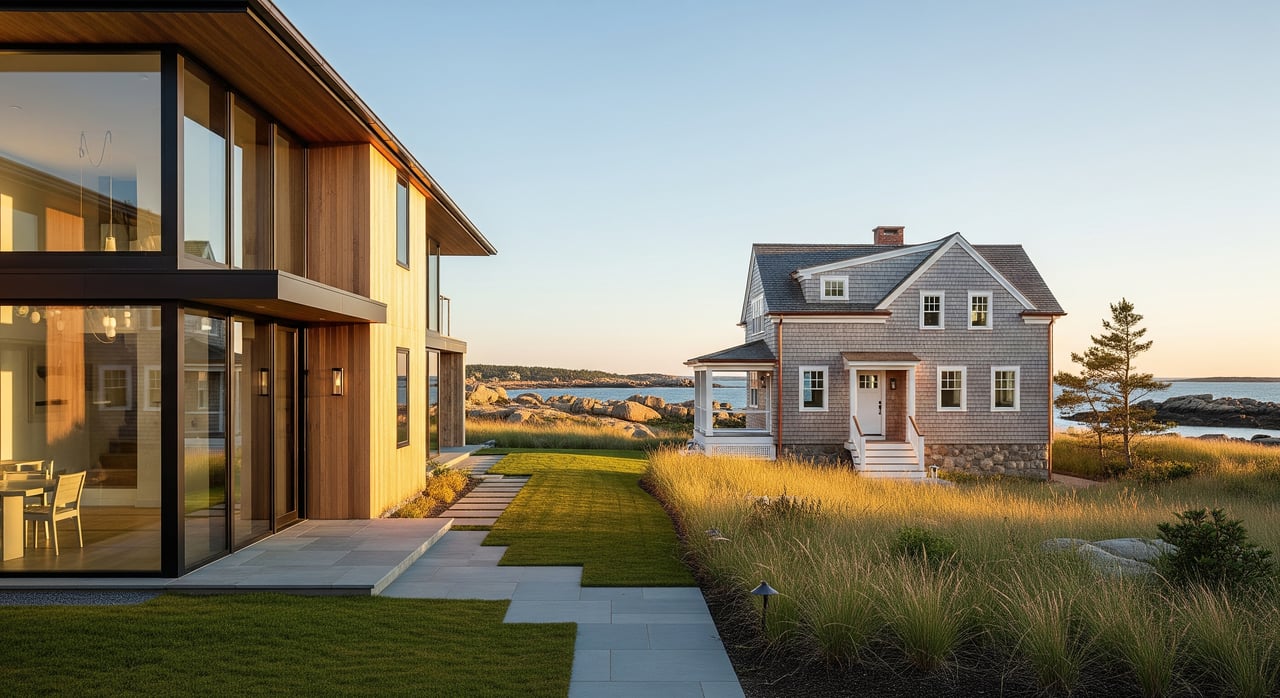
Torn between the sparkle of a new build and the character of an established home? You are not alone. In Scarborough and nearby Cumberland, both paths can work beautifully depending on your priorities, timeline, and appetite for maintenance. This guide walks you through the tradeoffs, the local details that matter, and a practical checklist so you can move forward with confidence. Let’s dive in.
Scarborough vs. Cumberland at a glance
Scarborough offers coastal access, beach neighborhoods, and convenient Route 1 corridors close to Portland. Cumberland tends to feature larger lots and a more rural-suburban feel while still within a reasonable drive of downtown Portland.
New-construction communities in Scarborough, such as those similar to The Downs or Dunstan Crossing, illustrate the style of planned neighborhoods you will find. Cumberland’s established areas often deliver more land and mature trees. Your best fit comes down to space, lifestyle, commute, and desired level of customization.
New construction: what you get
Finishes and flexibility
New builds usually include open layouts, contemporary kitchens, larger closets, and modern lighting. Expect a base price with tiered upgrades for kitchens, baths, flooring, and mechanicals. If you want custom layouts or premium materials, plan extra budget and time. New homes typically meet current codes and may include higher-efficiency insulation, HVAC, and optional EV or smart-home wiring.
Warranties and peace of mind
Builders commonly offer a layered warranty structure. Many provide roughly one year for workmanship and materials, two years for major systems, and longer coverage for structural components. Always review the written warranty for claim steps, exclusions, and whether coverage transfers if you sell. Third-party warranty providers are common, so confirm who handles service requests after closing.
HOAs and community rules
Many new neighborhoods form HOAs or condo associations to manage roads, snow removal, landscaping, lighting, and amenities. Before you commit, review the covenants, bylaws, budgets, reserves, and insurance details. Pay close attention to fee schedules, policies for increases, and architectural review procedures that govern exterior changes. Strong documents help protect property values and clarify responsibilities.
Lot sizes and outdoor space
New subdivisions often use land more efficiently, which can mean smaller lots than older neighborhoods. If you value a yard with privacy or mature trees, confirm lot dimensions and see the subdivision plan for future adjacent homes. Townhome or cluster developments may trade yard size for convenience and shared amenities.
Timeline, financing, and appraisal
A builder’s schedule can offer clarity, but weather, materials, and permits can introduce delays. Some builders partner with lenders and offer incentives like closing cost help or rate buydowns. Appraisals can be tricky when there are few comparable new sales nearby, so be ready with contingency plans or a larger down payment if needed.
Inspections during the build
Do not skip inspections. Schedule independent reviews at key milestones like foundation, framing, pre-drywall, and final. Builder checks are helpful, but an independent inspector protects your interests and can catch issues early when fixes are simpler.
Resale homes: what to expect
Character and location
Scarborough and Cumberland’s established neighborhoods offer a mix of colonial, cape, ranch, and other styles with unique details and mature landscaping. You may find proximity to long-standing commercial areas, town centers, or beach access that new subdivisions cannot replicate. If you love character and variety, resales are appealing.
Condition and hidden costs
Older homes can need near-term capital projects like roofs, siding, windows, or electrical updates. In Maine, pay close attention to septic age and capacity, well water quality, oil-fired heating systems, and any older wiring. Order a full home inspection, plus septic and well evaluations when applicable. This helps you plan for repairs and negotiate with a clear picture of true costs.
Energy and efficiency tradeoffs
Resales may require insulation upgrades, heat pump additions, or updated water heaters to match the efficiency of new builds. While retrofits are common, factor these into your budget and timeline. State programs like Efficiency Maine and applicable federal credits may help offset costs for qualified projects.
Lot sizes and privacy
Many established homes in Scarborough and Cumberland sit on larger lots, often with mature trees and natural buffers. If you want space and privacy, you may find more options in resale neighborhoods. Variety is the rule, so compare multiple properties to see different lot shapes and settings.
Local must-knows before you choose
Coastal flood and shoreland rules
Some Scarborough beach areas, including Higgins Beach, Prouts Neck, and Black Point, can fall within FEMA flood zones and shoreland overlays. Flood insurance, elevation requirements, and coastal setbacks can affect new construction design and total cost of ownership. Always check flood maps and local zoning early in your search.
Septic systems and wells
Both Scarborough and Cumberland include properties on private septic and well. For resales, request septic permits and pumping records, verify bedroom capacity, and order well water testing. For new construction, the septic design must be approved by the town or state, and percolation and setback requirements must be met. Replacement costs and timelines vary, so plan carefully.
Property taxes and assessments
New builds often see higher assessments once construction is complete. Speak with the town assessor about estimated post-build taxes. For resales, ask for current tax amounts and confirm whether a recent reassessment could change your future bill.
Schools and boundaries
Each town manages its own school assignments and boundaries. If school location is a priority, verify specific addresses, enrollment processes, and any current or planned changes directly with municipal school departments. Keep your research neutral and up to date.
Commute and transit
Scarborough to downtown Portland typically runs about 10 to 25 minutes depending on your exact location and traffic. Cumberland to Portland is often 15 to 30 minutes. Summer beach traffic and rush-hour congestion can extend times, so test your commute at typical hours. Limited regional transit serves parts of Scarborough, and Cumberland has fewer public transit options than more urban areas.
Energy incentives and upgrades
High-efficiency systems in new builds can lower operating costs from day one. If you choose a resale, look into insulation, heat pump, or electrical upgrade incentives through state or federal programs that may apply. These can make retrofits more affordable and comfortable.
Builder reputation and contracts
In Maine, your protection starts with the contract. Ask for references, review recent projects, and have an attorney examine the agreement, deposit terms, change-order policies, and dispute resolution. Clarify who handles warranty claims and how quickly service requests are addressed.
Compare with this quick checklist
If you are buying new construction
- Get the full written warranty, including exclusions and transferability.
- Review HOA covenants, bylaws, budgets, reserves, and insurance details.
- Confirm exact lot size, orientation, and planned adjacent lots on the subdivision plan.
- Request an itemized list of inclusions versus upgrades and associated costs.
- Clarify build timeline, contingencies for delays, financing options, and appraisal risk.
- Arrange independent phase inspections and confirm inspector access during the build.
- Verify permits, utility hookup responsibilities, and post-completion assessment timing.
If you are buying a resale
- Order a comprehensive home inspection plus septic, well, chimney, or roof inspections as needed.
- Document age and remaining life of major systems like roof, heating, hot water, electrical, and septic.
- Request maintenance records and permit history for renovations or additions.
- Obtain or review a survey for setbacks, lot lines, and any encroachments.
- Check flood zone or shoreland status for coastal or river-adjacent properties.
- Gather contractor estimates for likely near-term repairs or upgrades.
Which path fits you?
Buyer A: low maintenance first
You value time and predictability. A new build’s warranties, efficient systems, and clean start may outweigh a smaller lot or HOA rules. Incentives can help with costs if timing aligns.
Buyer B: character and land
You want established landscaping and room to spread out. A resale on a larger lot could be ideal, as long as you budget for inspections and targeted updates like insulation or system replacements.
Buyer C: commute and schools
You are focused on location, school boundaries, and drive time. Either option can work. Choose the home that places you in the right area while balancing maintenance needs and budget.
Practical next steps
- Define your top three priorities: space, low maintenance, customization, location, or timeline.
- Test-drive your commute at peak hours and in summer if beach traffic matters.
- Price out your path: compare a realistic new-build spec with your desired upgrades against a resale plus inspections and likely improvements.
- Collect documents early: builder contract and warranty, HOA packet, seller disclosures, septic and well records, recent utility bills, and any permits.
- Schedule inspections regardless of path. Independent reviews protect you and your investment.
Ready to compare specific neighborhoods or floor plans with a clear plan and local insight? Connect with a trusted, hands-on advisor who can guide you through the details and coordinate every step. Reach out to Melissa McKersie to map your best next move.
FAQs
What is the key cost difference between new construction and resale in Scarborough and Cumberland?
- New construction typically carries a premium per square foot for modern systems and warranties, while resales may offer more price flexibility but can require near-term repairs or upgrades.
What does a typical builder warranty cover on a new home?
- Many builders follow a structure of about one year for workmanship and materials, two years for major systems, and longer coverage for structural components, with details defined in the written warranty.
How should I evaluate HOAs in new communities like The Downs or Dunstan Crossing?
- Review covenants, bylaws, fee schedules, budgets, and reserves, confirm what services are included, check the policy on increases, and understand architectural review standards before you buy.
What inspections do I need for septic and well properties in Maine?
- Request septic permits and pumping records, order a septic inspection by a qualified professional, and test well water quality and flow, adding system-specific inspections if recommended.
How do flood zones affect buying near Scarborough’s beaches?
- Flood zones can influence design requirements, insurance costs, and total ownership expenses, so check FEMA mapping, local shoreland rules, and elevation requirements before making an offer.
Can I negotiate with a builder on a new home?
- Yes, but it often takes the form of incentives such as closing cost help, rate buydowns, or upgrade credits rather than a lower base price, and it depends on market conditions and inventory.