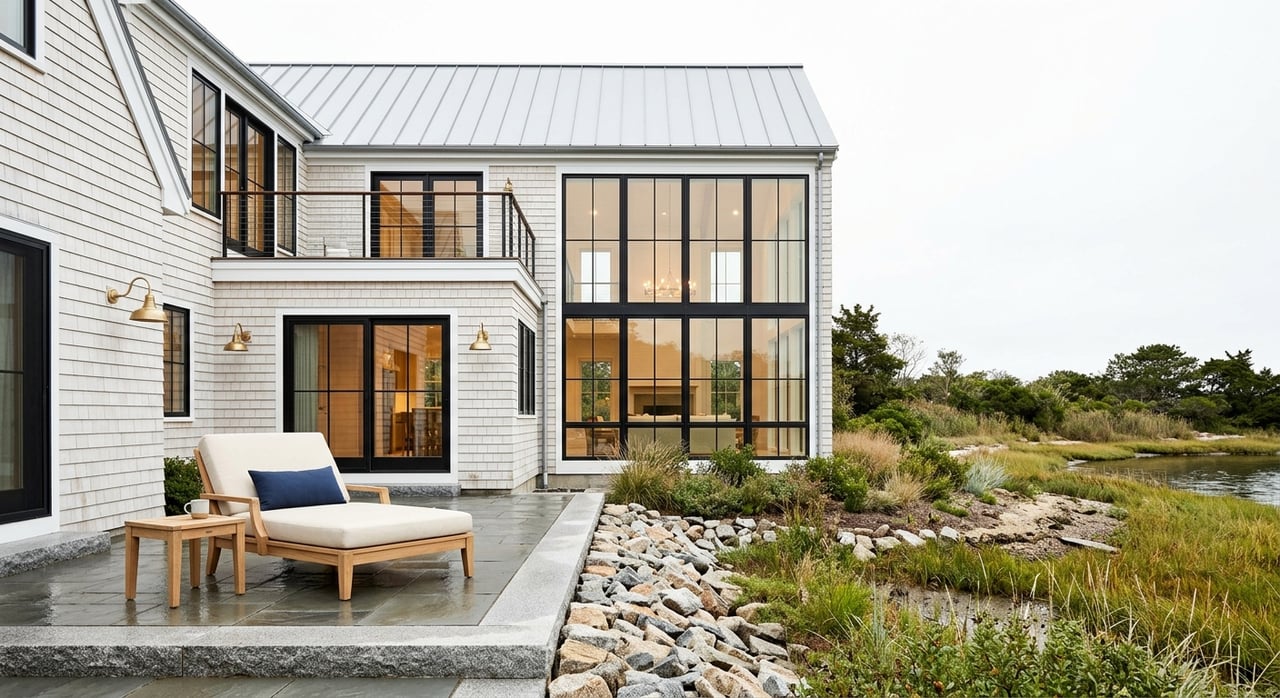
If you are dreaming about life near the water in Yarmouth, you are not alone. The appeal is easy to understand: Casco Bay access, the Royal River, public landings, trails, and coastal views all shape how people imagine living here. But in Yarmouth, the choice between buying on the water and buying near the water can have a big impact on your budget, upkeep, and day-to-day lifestyle. Let’s dive in.
Why this choice matters in Yarmouth
Yarmouth offers access to the Royal River, Pratt's Brook, Cousins River, and Casco Bay, with public access points that include Yarmouth Town Landing, Old Town Landing, Royal River Park, Madeleine Point, Sandy Point Beach, Camp SOCI, Littlejohn Island Dock, the public launch at the Yarmouth Historical Society, and the Royal River Trail, according to the Town of Yarmouth Comprehensive Plan.
That sounds like a simple win for coastal buyers, but there is an important detail. The same plan notes that most land around these water bodies is privately owned, so being close to the shoreline is not the same as having legal or practical water access.
This is one of the biggest reasons buyers benefit from slowing down and comparing options carefully. A home with direct frontage may offer convenience and views, while a nearby home may give you a similar lifestyle with fewer ownership demands.
What direct waterfront usually means
A direct waterfront property often gives you the clearest version of the coastal lifestyle. Depending on the property, that may include immediate access, open views, or convenience tied to a dock or mooring setup.
In Yarmouth, though, waterfront ownership also tends to mean higher purchase prices and more ongoing responsibility. The town's harbor and waterfront planning materials note that floats, ramps, docks, channel markers, and other waterfront infrastructure require continued management because of heavy use and weather exposure.
For you as a buyer, that means the waterfront premium is not just about the sale price. It can also show up later in maintenance, insurance, permitting, and long-term planning.
Waterfront benefits to weigh
If you are considering a home on the water, the main advantages often include:
- Immediate proximity to the shoreline
- Water views that shape daily living and resale appeal
- Potential convenience for boating or mooring, if those rights exist
- A stronger sense of direct connection to Casco Bay, the Royal River, or another water feature
These can be meaningful benefits, especially if being on the water is central to how you plan to use the home.
Waterfront responsibilities to expect
At the same time, waterfront ownership usually brings more complexity. Maine's shoreland zoning rules apply to land within 250 feet of coastal wetlands and saltwater bodies, plus certain river and stream buffers.
That can affect additions, vegetation clearing, shoreline work, setbacks, erosion control, and sewage-related standards. In practical terms, a property may feel flexible when you first tour it, but future changes can be more limited than many buyers expect.
What nearby coastal living can offer
In many towns, “near the water” feels like a compromise. In Yarmouth, it can be a very practical and appealing choice.
The town has a well-developed recreation network. According to the comprehensive plan, Community Services monitored 27.85 miles of paths and trails in 2022 and maintains 677 acres of open space. That helps support a coastal lifestyle even when your home is not directly on the shoreline.
Yarmouth's planning documents also note that several public marine access points are within easy walking distance of nearby neighborhoods. On Cousins Island, for example, public sites include Sandy Point Beach, Sunset Point Overlook, and Madeleine Point, as outlined in the municipal planning copy of the comprehensive plan.
For some buyers, that nearby option offers the best balance. You may still enjoy regular access to beaches, launches, trails, and water views without taking on every cost that comes with direct frontage.
Budget is a major factor
This decision matters even more because Yarmouth is already a high-cost market. The town's January 2025 housing metrics report says the 2024 typical home value was $719,131, while the five-year median sale price for all home types was $869,900.
The same report found that a home affordable to a median-income household would be $278,644, and that 100% of homes sold in 2023 were unaffordable to median-income households. In other words, buyers are already entering a competitive and expensive environment before layering in any waterfront premium.
That is why the right question is not simply, “Can I buy on the water?” It is also, “Will I use the water enough for the extra cost to make sense for my household?”
Carrying costs matter too
Beyond the sale price, annual carrying costs deserve close review. Yarmouth's draft FY 2025-26 budget shows a tax rate of $15.92 per $1,000 of value.
At that rate, a $1 million assessment suggests about $15,920 per year in property taxes before exemptions and any revaluation effects. The same budget also notes that the town was conducting a statistical revaluation of all real property, so buyers should understand that assessed value and future tax impact may shift over time.
Flood and climate risk need parcel-level review
If you are considering waterfront or very close-in coastal property, flood risk should be checked carefully for the specific parcel. According to FEMA flood map guidance, areas with a 1% annual chance of flooding or higher are considered high risk and have at least a 1-in-4 chance of flooding over a 30-year mortgage.
FEMA also notes that flood risk is not only a waterfront issue. Nearly one-third of flood claims come from outside high-risk zones, and flood damage is not covered by standard homeowners insurance.
That means you may need separate flood coverage depending on the property and lender requirements. It also means a home that looks less exposed at first glance may still deserve a full insurance and risk review before you buy.
Sea level rise is part of long-term ownership
For long-term buyers, climate exposure is part of the conversation too. Maine's climate plan impact summary says the state has already experienced eight inches of sea level rise and projects another 1.5 feet by 2050 and 4 feet by 2100.
Yarmouth's comprehensive plan states that the town is vulnerable to sea level rise and marsh migration, and that public marine access points may be at risk over time. If you are buying with a long horizon, especially as a legacy or second-home purchase, that future context matters.
Questions to ask before you buy
Whether you are looking on the water or nearby, a few questions can quickly clarify whether a property fits your goals.
For direct waterfront homes
Ask about:
- Whether the property includes deeded water access
- Whether a dock, float, or mooring exists and whether it is transferable
- Flood zone status and likely flood insurance needs
- Shoreline condition, drainage history, and any erosion or stabilization work
- Shoreland zoning limits on future additions or exterior changes
- The annual budget you should expect for taxes, insurance, and upkeep
For nearby coastal homes
Ask about:
- The actual distance to beaches, launches, parks, and trails
- Whether access is public, deeded, or simply nearby
- Whether the lot still falls inside any shoreland zoning area
- Parking and ease of use at the access points you care about most
- Whether lower maintenance and lower exposure outweigh the lack of direct frontage
These questions help move the conversation from lifestyle imagery to practical ownership.
Which option fits your lifestyle best?
If you know you will be on the water often, direct frontage may be worth the premium. That can be especially true if boating access, private shoreline use, or daily water views are central to how you want to live.
If your real goal is to enjoy Yarmouth's coastal setting several times a week through walks, launches, beaches, and public access points, a nearby property may deliver the lifestyle you want with more flexibility. In a market like Yarmouth, that difference can be significant.
The best decision usually comes down to honest use patterns. If you will truly use the water often, direct access may justify the extra cost. If not, buying nearby can be a smart way to enjoy the same town assets while keeping more room in your budget for the home itself.
If you want help weighing waterfront premiums, access questions, and ownership tradeoffs in Yarmouth, Melissa McKersie offers hands-on guidance backed by deep local market knowledge and a highly personalized approach.
FAQs
What does nearby to the water mean in Yarmouth real estate?
- In Yarmouth, nearby usually means a home with convenient access to public landings, beaches, parks, or trails rather than direct private shoreline ownership.
What should you verify before buying a Yarmouth waterfront home?
- You should verify deeded water access, dock or mooring details, flood zone status, shoreland zoning limits, shoreline condition, and expected annual carrying costs.
How expensive is the Yarmouth housing market for coastal buyers?
- Yarmouth is a high-cost market, with a 2024 typical home value of $719,131 and a five-year median sale price of $869,900, before any added waterfront premium.
Does being close to the shoreline in Yarmouth guarantee water access?
- No. Yarmouth's comprehensive plan notes that much of the land around local water bodies is privately owned, so proximity does not automatically mean access rights.
Why can buying near the water work well in Yarmouth?
- Yarmouth has extensive public access points, 27.85 miles of paths and trails, and 677 acres of open space, which can make nearby homes a strong lifestyle alternative to direct waterfront ownership.